
How to Find Your Spirit Animal Without Taking a Quiz

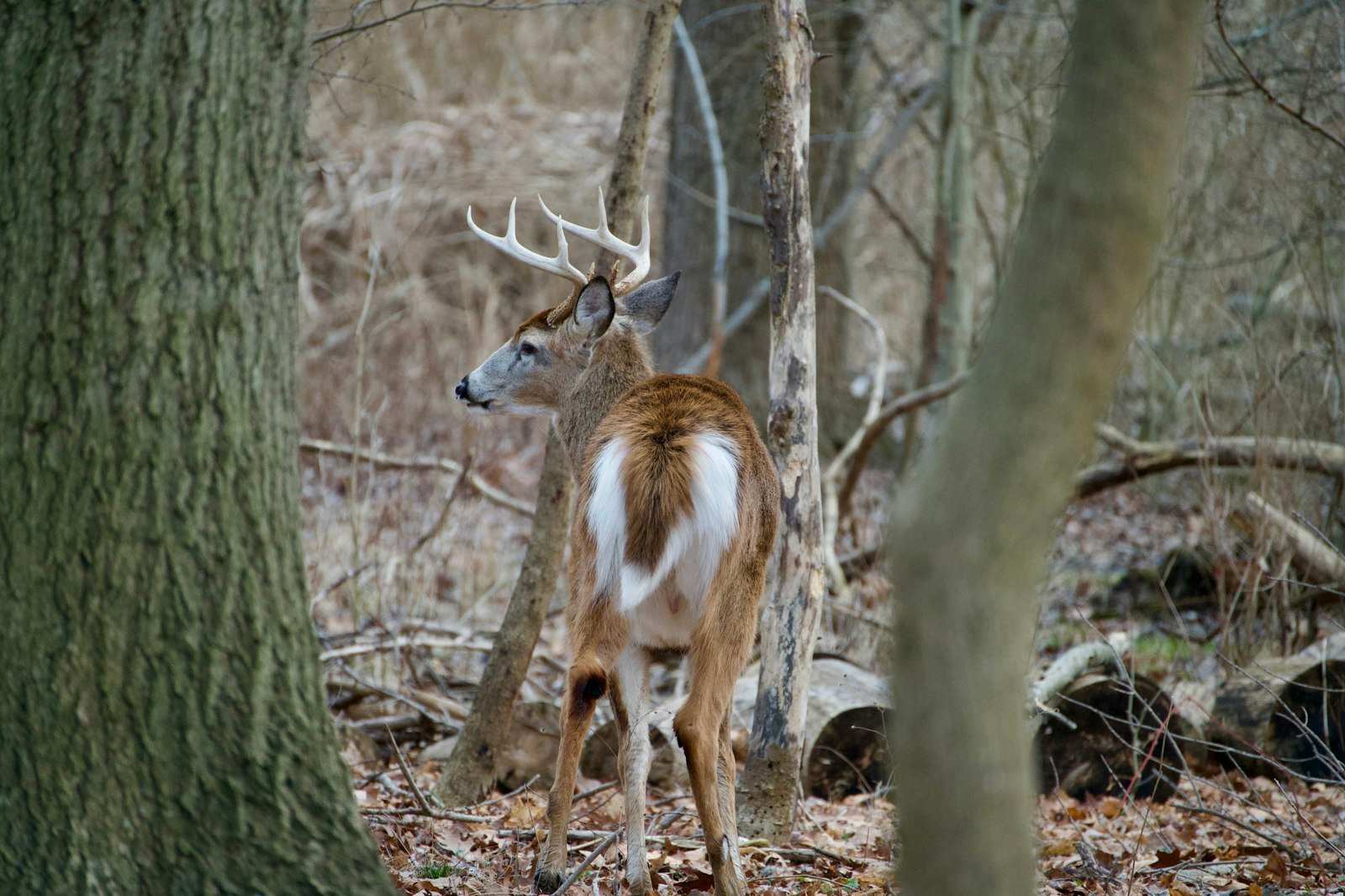
A deer that steps onto the trail three times in one month, an owl that keeps coming back in your dreams, an animal you were already drawing as a child: that is usually how the question of how to find your spirit animal begins. The answer is not in a twelve-question quiz. It is in what you have already lived with an animal, as long as you know where to look.
At a glance
| Clue | What you notice | What it is worth |
|---|---|---|
| Repeated encounters | The same animal, often, in places you would not expect it | The most concrete clue, if you write it down |
| Dreams | An animal that returns from one dream to the next | Strong when the emotion in the dream is clear |
| A lifelong pull | The animal that has fascinated you since childhood | Says a lot about what you admire |
| Shared behavior | An animal whose way of living looks like yours | Useful, but easy to force |
| Online quizzes | An animal assigned from your answers | A game, not a revelation |
| Birth date charts | An animal fixed by a table | A modern invention, to take as such |
Where the idea of a spirit animal comes from
“Totem” comes from Ojibwe, an Algonquian language spoken around the Great Lakes, where doodem refers to a clan. Among the Anishinaabe, the doodem belongs first to a kinship group and is passed down through the family: you belong to the Crane, Bear or Loon clan. It is not an animal a person picks alone, and it is not a personal guide.
The idea of one animal that belongs to each individual, accompanies them and mirrors them, comes mostly from twentieth-century Western spiritual movements, which blended these traditions with others: Siberian shamanism, protective animals in European folk tales, the psychology of archetypes. Many Indigenous writers object to “spirit animal” being used as a casual phrase, and some people now prefer “animal guide” for that reason. You can still use the modern idea, but it is honest to know it is not “a Native American tradition” in the way it is often sold.
In its modern sense, a spirit animal is an animal whose traits inspire you, steady you or resemble you, and that you use as a reference point to think about the way you live. It is an image you give yourself, not a verdict you receive.
Spirit animal, animal guide, power animal
These words overlap a lot online. In everyday use, the spirit animal stays with you over the long run and reflects your character. The animal guide shows up for a specific period, often a time of change. The power animal comes from neo-shamanism, the shamanic practices revived in the West from the 1980s: it is the one you “call on” to find a strength you lack.
Nothing forces you to keep them apart. Just remember that an animal that appears during a move or after a loss is not necessarily the one for your whole life: it may be speaking about that passage.
4 clues to find your spirit animal
1. The animals you cross without looking for them
In workshops, this is almost always where people start: “I’ve been seeing herons everywhere since I changed jobs.” Before reading a sign into it, check whether the encounter is really unusual. A red-tailed hawk on a highway light pole or a squirrel in a city park is everyday life; a fox crossing a parking lot in broad daylight, or an owl landing on your windowsill, much less so.
Write down every encounter for a month: date, time, place, what the animal was doing, what was on your mind. Three encounters on paper with the same animal are worth more than a vague impression. If an animal keeps returning when nothing in your surroundings explains it, keep it at the top of your list.
2. The animals in your dreams
An animal that comes back in several dreams, with a strong emotion, is a serious lead: it is also through dreams that many mediums and healers say they met theirs. What matters is not only the species but what it does. A wolf that follows you without attacking does not tell the same story as a wolf running away.
Write the dream down on waking, before you get up, in three lines: the animal, its behavior, how you felt. After a few weeks, the animals that keep returning stand out on their own.
3. The animal that has fascinated you since childhood
Think back to the animals in your drawings, your stuffed toys, the books you read again and again, the nature shows you would not miss. A fascination that lasts thirty years often says something about what you admire or what you would like to grow in yourself.
Ask yourself one simple question: what do you like about this animal? If the answer is “its freedom”, “its patience” or “the way it looks after its own”, you already hold the heart of what it means to you.
4. The animal whose behavior looks like yours
Look for an animal whose way of living resembles yours. Do you watch for a long time before acting, like a heron standing still at the water’s edge? Do you need others to move forward, like geese flying in formation? Do you adapt anywhere, like the coyote, now as much at home in suburbs as in open country?
This is the easiest clue to force: people readily choose the wolf or the eagle because they have good press. Ask someone close to you which animal they spontaneously associate with you. Their answer is often more accurate than yours.
Cross-check the clues
An animal that shows up on two or three clues at once is your best candidate. The raccoon you meet every night in the yard, that you drew as a kid and that, like you, gets into everything to understand how it works, is likely to say more to you than the lion from an online quiz.
Several animals may stand out. Nothing rules that out: many people recognize themselves in two animals, one for their character and one for the period they are going through.
If no animal stands out, that is not a failure. Keep noting your encounters and dreams for a few months: the question does not need an answer right away.
What online quizzes are worth
“What’s my spirit animal” quizzes ask a series of questions about your personality, then assign you one animal out of a dozen or so. They are a pleasant game, and they can introduce you to an animal you had not thought of. But the result depends on the handful of animals the author chose and on how the questions were written.
Treat the result as a suggestion to test against the clues above. If it matches no encounter, no dream, no attraction, it will not teach you much.
And spirit animals by birth date?
Charts that give an animal to each period of the year (beaver, deer, woodpecker…) come mostly from The Medicine Wheel: Earth Astrology by Sun Bear and Wabun, published in the United States in 1980. It is a modern creation inspired by Western astrology, not a calendar handed down by an Indigenous nation. You can look at it out of curiosity, knowing where it comes from.
A birth date will never say as much as what you have lived with an animal. If the chart gives you the otter while it is the owl that haunts your nights, follow the owl.
Once you have found your animal
Read what different traditions say about your animal, then keep what echoes your own life, the way you keep from a reading what sheds light on your situation and leave the rest. Look first at the traditions of the place and people the animal belongs to, and at your own family’s culture, rather than at generic lists of meanings copied from site to site.
Get to know the real animal too: where it lives, in what season you see it, how it hunts or protects itself. The better you know it, the easier its presence in your life is to read, and the faster you will recognize it when it comes back.
Finally, respect it. A spirit animal is not picked up, fed to make it come closer or disturbed for a photo. In the United States, most native wild birds are protected under the Migratory Bird Treaty Act, even their feathers and nests, and watching from a distance is the best way to see an animal again.
